
LAHU HILL TRIBE - BRASS BRACELET - MAAG LAOS, CIA, Vietnam War - MACV-SOG, Q.146 For Sale
When you click on links to various merchants on this site and make a purchase, this can result in this site earning a commission. Affiliate programs and affiliations include, but are not limited to, the eBay Partner Network.

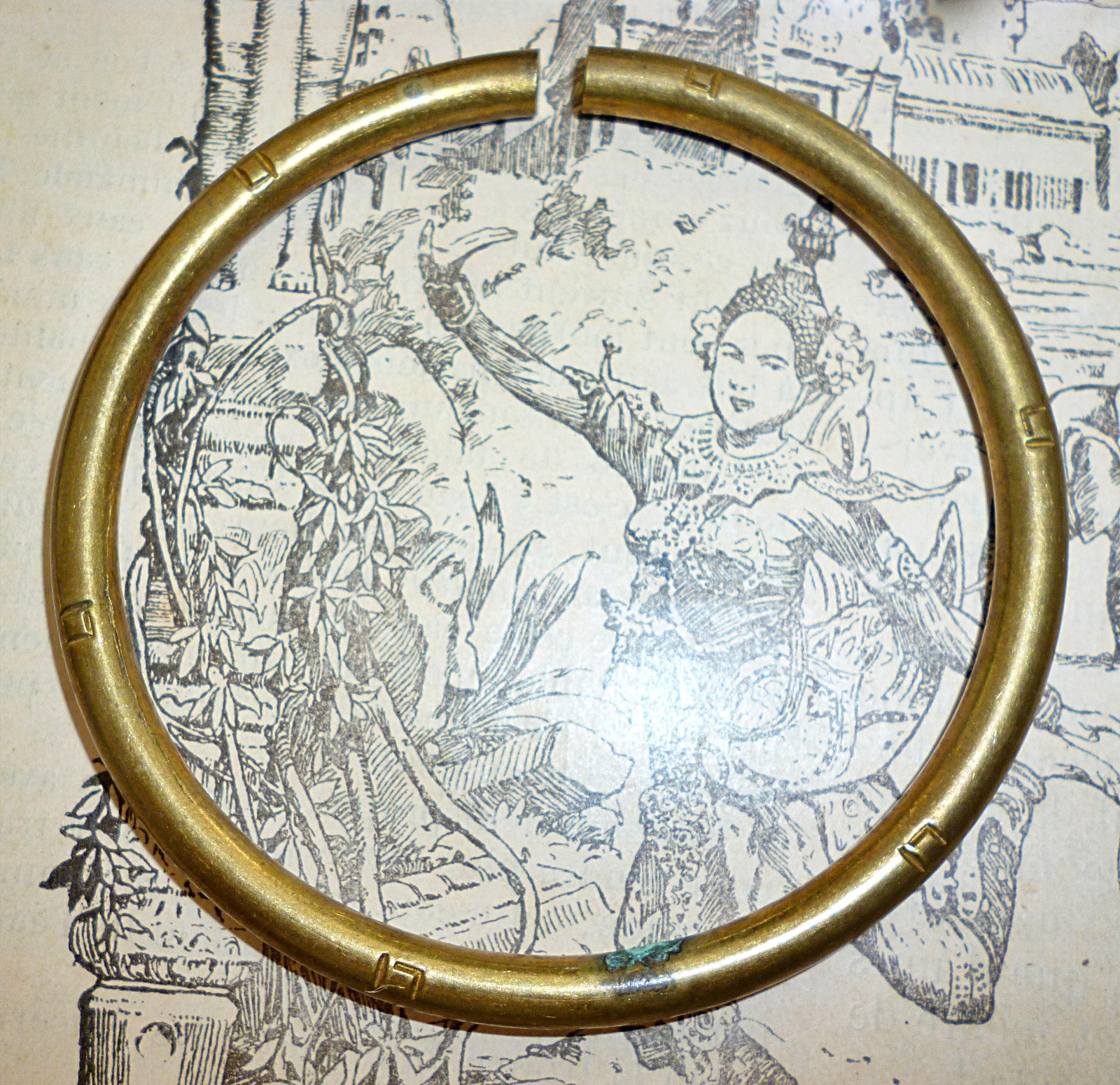
LAHU HILL TRIBE - BRASS BRACELET - MAAG LAOS, CIA, Vietnam War - MACV-SOG, Q.146:
$155.20
MEN'S BRASS BRACELET - US Special Forces - Central Highland Hill Tribes
Montagnard - Brass Bracelet - LAHU Hill Tribe - Notched L L
Laos - North Vietnam - CIA - MAAG LAOS - MACV-SOG - North Vietnam - Laos Operations
US Special Forces Extremely rare piece Excellent Rare Piece Montagnard Friendship bracelet Superb Condition,
Excellent Piece. Brass, Montagnard Friendship / loyalty band. These pieces gifted by Montagnard Hill Tribe ( Nung, Meo, Sedang, Bahnar, Bru, Cao Dai, Cham, Cua, Halang, Hre, Hoa Hao, Hroi, Jarai, Jeh, Katu, Khmer, Koho, Ma, M'nong, Muong, Raglai, Rengao, Rhade, Stieng, Lahu) operatives to US Mike Force attached personnel displaying their loyalty and friendship.
This is a very rare Lahu HILL TRIBE - Notched - LLL (Laos, North, Vietnam) Hill Tribe marked Piece.
Lahu Hill Tribe
The Lahu are a Tibeto-Burman hill tribe traditionally based in the rugged uplands of northwestern Vietnam, northern Laos, southern Yunnan, and later Thailand and Burma (Myanmar).
In Vietnam, they are concentrated in the border regions of Lai Châu and Điện Biên, near the Lao and Chinese frontiers.
Historically isolated, the Lahu practiced slash-and-burn agriculture, raised livestock, and cultivated opium as a highland cash crop integral to both subsistence and trade.
By the mid-20th century, the Lahu were deeply involved in the opium economy of the Golden Triangle, a region overlapping Laos, Burma, and northern Thailand.
Their upland settlements were ideal for growing Papaver somniferum (opium poppy), and for generations opium served both ritual and economic purposes.
French colonial authorities tolerated, and at times taxed, opium production; post-independence, the Lahu continued this trade under new regional power structures.
The Vietnam War and the wider Indochina conflict drastically altered the geopolitical and criminal dynamics of the highlands.
As the CIA launched its "Secret War" in Laos to counter communist expansion, it relied on existing tribal networks, including the Lahu, Hmong, Akha, and Mien, to supply paramilitary manpower, intelligence, and logistical support. In exchange, the CIA, often working through Air America and local warlords, facilitated or overlooked opium trafficking, which became a critical revenue stream for tribal militias.
Within this framework, the Lahu played a dual role: contributing fighters to irregular militia units, and continuing opium production and transport through traditional highland trade routes.
In Laos and adjacent Vietnamese frontier regions, Lahu villages acted as nodes in the narcotics supply chain, with some shipments moved under the protection or knowledge of CIA operatives and allied local factions.
Complicating this further, Corsican criminal networks, which had been embedded in Southeast Asian narcotics trade since the First Indochina War, remained influential during this period.
They collaborated with anti-communist factions and had ties, direct or indirect, with French intelligence (SDECE) and U.S.-aligned figures in Laos and Vietnam.
This created an ecosystem in which Lahu opium supported not only tribal economies but also covert military operations and transnational trafficking syndicates, including through the Pak Ou caves, Long Tieng, and onward to Bangkok and Marseille.
As the war ended in 1975 and the communists took control of South Vietnam and Laos, the Lahu, particularly those affiliated with anti-communist militias or the narcotics trade, fled en masse.
Many migrated south into Thailand and Burma, often with tacit approval or assistance from the remnants of CIA-supported factions.
In Thailand, Lahu communities were absorbed into the highland refugee infrastructure alongside Hmong and Akha groups. In Burma, some aligned with the Shan State Army or United Wa State Army, both heavily involved in the postwar narcotics trade.
A smaller number of Lahu made their way to the United States under refugee resettlement programs, often through Thailand.
In postwar Vietnam, the remaining Lahu were viewed with deep suspicion. Their traditional lands near the border were subjected to state surveillance, forced relocation, and crop substitution programs aimed at eradicating opium.
Traditional practices, dress, and language were discouraged, and communities were moved into fixed villages as part of national integration campaigns.
Today, the Lahu in Vietnam remain economically and politically marginalized, while larger Lahu populations in Thailand and Myanmar continue to face challenges related to land rights, cultural preservation, and, in some areas, lingering involvement in illicit trade.
The Lahu’s Vietnam War legacy is inseparable from their role in the Golden Triangle's opium economy, their tactical value to CIA operations in northern Indochina, and their entanglement in postcolonial criminal-political networks that blurred the lines between insurgency, intelligence, and narcotics.
Solid Brass
Elite Special Forces Airborne - Rare Piece.
LAHU HILL TRIBE - BRASS BRACELET - MAAG LAOS, CIA, Vietnam War - MACV-SOG, Q.146
$155.20
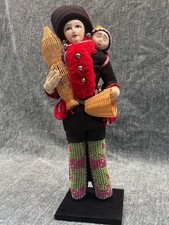
Rare 12”Musur Lahu Thai Hill Tribe Doll Handmade Vanida S Mongkhon Youthana
$72.00
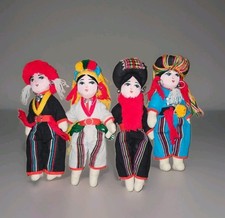
Vintage Thai Hill Tribe Cloth Dolls Lot 4 Akha Hmong Yao Lahu Folk Art Ethnic
$39.99
